|
|
         |
|
|
 |
 
|
|
| |
|
|
| |
|

We had an open topic this season. Our only guidelines were that submissions be nonfiction with a minimum of 200 words, and a maximum of 1,000 words.
|
| |
|
THANK YOU TO OUR CONTEST SPONSOR:
It is the sincere desire of our sponsor that each writer will keep her focus and never give up. Mari L. McCarthy has kindly donated a prize to each winning contestant. All of the items in her shop are inspiring and can help you reach your writing goals. Write on!
|
| |
|
Note to Contestants:
We want to thank each and every one of you for sharing your wonderful essays with our judges this season. We know it takes a lot to hit the send button! While we’d love to give every contestant a prize, just for your writing efforts, that wouldn’t be much of a competition. One of the hardest things we do after a contest ends is to confirm that someone didn’t place in the winners’ circle. But, believe it when we say that every one of you is a true winner for participating.
To recap our current process, we have a roundtable of 12+ judges who score equally formatted submissions based on: Subject, Content, and Technical. If a contestant scores well on the first round, she receives an e-mail notification that she passed the initial judging phase. The second round judging averages out scores and narrows down the top 20 entries. From this point, our final judges help to determine the First, Second, and Third Place Winners, followed by the Runners Up.
As with any contest, judging so many talented writers is not a simple process. With blind judging, all contestants start from the same point, no matter the skill level, experience, or writing credentials. It’s the writer’s essay and voice that shines through, along with the originality, powerful and clear writing, and the writer’s heart.
Thank you for entering and congratulations to all!
 Now on to the winners!
Drum roll please....

1st Place: Carole Vasta Folley
Vermont
Congratulations, Carole!
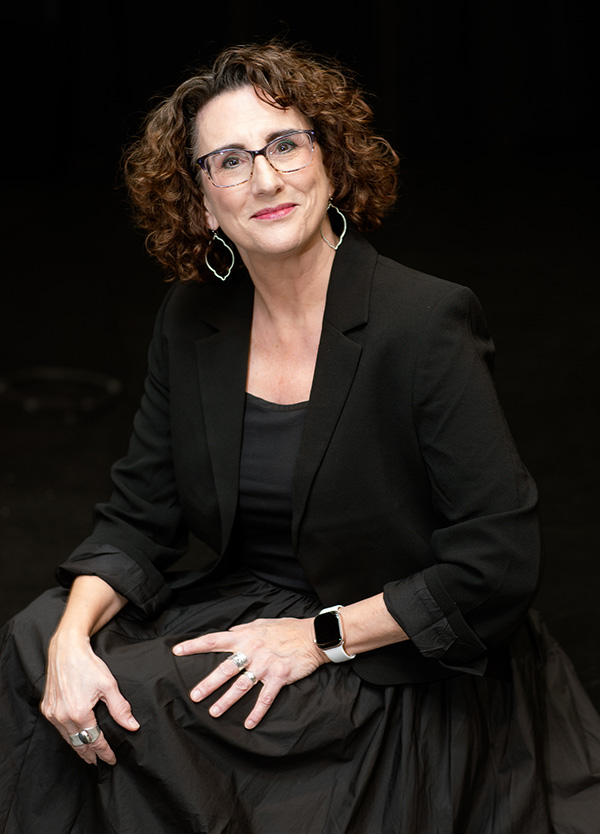
Carole’s Bio:
Carole Vasta Folley is a playwright, columnist and creative nonfiction writer. Her newest play, Control Top, which examines the impact of gendered clothing on women, premiered June 2025 and was written with the support of the Vermont Arts Council and the National Endowment for the Arts. Carole’s In Musing column has won multiple awards from the New England Newspaper and Press Association and the National Society of Newspaper Columnists.
Printable View
He Hit Me
By Carole Vasta Folley
. . . he backed smack into my car, as if it wasn’t there, as if I wasn’t there, having thrown it into reverse, his Dodge didn’t dodge my Dodge because he never checks his review mirror before stepping on the gas and peeling, tires-screeching, out of our garage, for who cares that something or someone might be there - such reckless behavior what with three cars parked in the driveway at any given time because seven of us in the house have driver’s licenses, six of those his very children, and yet he plowed into me, my neck thrown back in pliancy and pain, while I had car keys in hand as I was about to get out of the Colt when I felt the impact, not to the bumper, but to my insides, because I knew that outside the rage was about to spew, along with biting blame from a tightly wound hulk called dad, who exited his car and came at me stalking, a red-faced, grossly hirsute ogre, his full-bore commitment to intimidation was breath-stealing as he glared at me over his dark-tinted aviators, a look my mother shrewdly dubbed the evil-eye since she too knew, under no conditions, he would ever apologize, but somehow, damn it, I always carried a teeny-tiny hope for his remorse - a ridiculous, stupid wisp of possibility that grew inside me like a weed that kept coming back no matter my persistent pulling that only severed fragments that left taproots deep in my soul-soil only to regenerate tubers of hope that kept me entangled like tenacious bindweed, enmeshed and ensnared by his roar set on edge, “fucking son of a bitch, you hit my car, look, look at what you did, what’s wrong with you . . .” while I, a mere teen, stuttered in the gaps, trying to get words out of my measly mouth, uttering only gasps of air as his wrath ratcheted, so I proffered my shaking hand showing the keys that were out of the ignition before the collision, but no truth ever matters to this fraudster, “Jesus Christ, look what you did, you hit me, do you know how much this will cost me,” no, I think, no - I only know what it will cost me, “I let you drive my goddamn car and look, look at how stupid you are, I’ve told you once, I’ve told you a million times to look before you drive,” yes, I think yes, wanting to yell “bully” and “hypocrite” but, instead, I take the regular-rutted escape route, a mission of contrition and submission - the words slide out of me so hard-boiled and oiled with use, “I’m sorry, I’m sorry, I’m sorry” to which he, passably placated, storms off, slamming doors to broadcast his righteousness, while I swallow the shame of compliance and hide the rest of the day, girding loins for what comes next until he comes home that evening and seeks me out in order to hand me a single yellow rose, leaning in close enough for me to smell the Old Spice of fear, he whispers, feigning magnanimity, “I forgive you,” making me kiss him and thank him for my humiliation, but I do not want to take his thorny offering, yet I have no other way out, I must take it in hand and faux heart in order to complete his dramatic scene, knowing I will wait in the wings, enduring his other acts of filthy fatherhood, until the day I finally get out of Dodge . . .
***
What Carole Won:
2nd Place: Tracy Buckner
Raleigh, North Carolina
Congratulations, Tracy!

Tracy’s Bio:
Raised in the hollers of Southern West Virginia, Tracy Buckner has been weaving stories since she could speak. Now living in Raleigh, NC, she is a mom and grandma who works in the tech world. She channels her love for storytelling into writing, drawing inspiration from her Appalachian roots and the rich tapestry of everyday life.
Printable View
Lessons Written in
My Grandfather’s Hands
By Tracy Buckner
1. To guide.
My grandfather’s hands, strong and sure, clutch the reins of my pony, leading me from the stall. While I ride, his hands scatter corn kernels for the banty hens, golden kernels glistening against the dirt. Their feathers flutter as they dart and peck their food. Days later, he clamps the lawnmower steering wheel as I perch on his lap, the sharp sweetness of grass and lavender rising in the summer air. I remember, now, a faint tremor, the first whisper of what was to come.
2. To play.
My grandfather, Papa to me, pushes me on the wooden swings, down by the old coal mines. Two kites caught in the same wind. His laughter tangled with mine. Days later, we color pictures of Mickey and Minnie while lying on the scratchy amber carpet. His fingers, dwarfed by the tiny crayons, turn the sky purple, the grass blue, and Goofy pink—just to hear me giggle.
3. To hold close.
Papa folds me into his frayed blue recliner, his hands wrapped securely around my waist. He gently brushes his bristly beard against my cheek. I cringe and squeal with delight, pulling away, then snuggling back again. His whiskers—prickly, familiar, ticklish—warm against my cheek.
4. To teach.
We flip the pages of my schoolbooks. A hooked finger outlines the steps of long division, circles spelling words, taps the table when I get frustrated with adding fractions. His creased hands clasped with a patience I didn’t always deserve, allowing me to puzzle through until the answer came.
5. To praise.
Sunday after Sunday and Wednesday nights, too, Papa’s hands coax gospel hymns from his Gibson guitar. On quieter days, his bent and knotted fingers dance across the piano keys, lifting praise in melodies that fill the room. And when he calls parishioners to the altar, those same crooked fingers curl around the neck of his daddy’s mandolin, singing faith in every trembling note.
6. To steady.
His wrinkled hands grip the steering wheel of my first car, showing me how to turn the wheels toward the curb just in case the parking brake fails. His grasp weakened as he knelt beside me, directing my hands to place the jack, loosen the lug nuts, and find the spare. His body moves more slowly now, joints stiff and cracking. But his hands, crooked like a swan's neck, still remember every motion.
7. To pray.
Throughout his life, Papa never failed to fold his hands in prayer. He bowed at his desk chair, fingers intertwined in reverence. Tears dripped down his cheeks, beads of sweat dotting his forehead. Words failed him. Still, he prayed. He called on God as Jesus had in the Garden of Gethsemane—not my will, but yours be done. Faith wasn’t just a word. It was the frame of our house; his prayers, the beams beneath my floorboards, steady when everything else threatened to collapse. Years later, I still reach for his strength, his wisdom, his faith when my world crumples.
8. To endure.
At ninety-two, the blue rivers beneath his skin guide the nurse with the IV needles. His arthritic hands curl into reluctant fists, knuckles pale against the patchwork quilt. He pulls it close, as if the tattered fabric might anchor him. The fingers that once held reins, crayons, and steering wheels now curl inward, trying to hold on, to keep the years from escaping. Now, when life loosens my grip, I remember his hands. His lesson endures: hold on when you can, let go when you must.
***
What Tracy Won:
3rd Place: Sophie Berghouse, M.D.
Rheinland, Germany
Congratulations, Sophie!

Sophie’s Bio:
Sophie was raised in the Midwest and spent the first three decades of her life there. She attended medical school, completed her residency and fellowship, and felt pleased her life was comfortably mapped out. Then life introduced a plot twist: a permanent move to Germany due to her husband's job. Just as she began to find a new rhythm within the different language and culture, Sophie faced another plot twist she never saw coming: her third child was born with severe disabilities. When Sophie grows up, she wants to write a novel about traveling Europe with a wheelchair and four kids in tow. For now, she will focus on short stories detailing her (mis)adventures in parenting, special needs, and most importantly, living. She hopes her experiences can support and encourage other women and mothers facing unexpected life changes.
She is not a big fan of socials but grudgingly accepts that they are here to stay. The only social link she has is on Substack: @sophieberghouse, where she has a mightily underwhelming number of followers.
Printable View
Lingchi
By Sophie Berghouse, M.D.
Lingchi, death by a thousand cuts.
The first slice: “She looks tired, she must need a nap.”
You, a newborn. Me, an insecure mother. Don’t all infants look tired? You appeared so perfect with your soft features and supple cries. Instantly, I fell in love with your sweet acidic smell, the feel of the fuzz on your fontanelle, the way you nuzzled yourself into my chest for warmth. Just several weeks old, and you already owned me. She looks tired. No, I would not allow criticisms to blemish this cocoon of tenderness and affection.
The second scratch: “She has all ten fingers and ten toes; she must be healthy.”
You woke each hour during the night and needed to be carried before exhaustion finally let you sleep again. I crumpled up right next to you on the hallway floor, too tired to take another step towards the bedroom. Why hadn’t you learned to self-soothe? Why couldn’t you support your own head? I felt nauseous just thinking about any imperfections. All babies are different, milestones are just averages, all limbs were accounted for—each worry was rationalized. I clung to the life I had imagined. Until I could no longer quiet the fears. What if? But no, it couldn’t be, babies with disabilities happened to others, not to me.
The third graze: “If she’s not eating, she must just have a small cold. Toddlers must build up immunity.”
I desperately wanted to believe the placations. But the internal alarm bells were shrill. I tried to align both, to create a narrative that would together encompass normal development and you. But you had now been sick for weeks. I dialed the pediatrician, my hand heavy with the weight of worry as I pressed each digit. Willing my hands to force the numbers, I watched as if those were fingers belonged to someone else. I didn’t want to know the answers to my questions.
The fourth infliction: “I’m sorry. There is no cure.”
Rare, one in every 100,000 births—enlarged spleen, delayed development, cognitive impairment, loss of skills, the list went on, and my ears began to ring. The doctor’s mouth was moving, but I couldn’t make out any words. Instead, I felt myself fall deeper into numbness. My eyes lost focus, as if I was walking around without glasses. I could make out the doctor’s silhouette, who was still talking. Then, silence. I interpreted that as my sign to leave. I gathered you, our things, and floated out the door.
The fifth incision: “She’s too big to be in a stroller, you need to have her walk.”
“But, can’t you see? She can’t walk,” I wanted to scream back. But I just smiled and tacitly agreed to expedite the conversation. I didn’t need to divulge your medical information to curious strangers. I would not have been able to without collapsing. I needed to invest every bit of energy into keeping up my armor. At 22 months, your muscles were still too weak to carry your weight. But I didn’t want to give up. I found hope by reading research trials, motivating pharmaceutical companies, and communing with other rare disease parents.
The sixth nick: “They make walkers that tiny?”
You were making progress on the experimental medication, on your own timeline. Your first steps were at 24 months, your first words at 36 months. But you communicated, and you were thrilled to utter words. You waited with expectation to see if your sounds would land. Each day, you had more successes. We were ecstatic, the two of us, by all the new skills you achieved. My chest relaxed a little more each day.
The seventh puncture: “We are pulling this medication out of trial, effective immediately.”
The email from the pharmaceutical company came in and shattered the innocent morning. “How can they do that?” I asked the void. How can a company have the power to eradicate all our hope? The treatments gave you speech. They gave you muscle tone. They gave us a shot at life.
Lingchi, an ancient Chinese torture method banned in the early 1900s.
The eighth slit: With time, no words, just gazes.
Comments morphed into curious looks, especially when they saw you in a wheelchair. Sometimes, an ephemeral repugnance flashed over faces. But I saw it, subtle and real. I hoped you wouldn’t notice. If you did, your face didn’t reveal any sadness. I would have caught all those wrenching gazes and diffused them if it meant you never became aware of one. But the unspoken message was always the same: we are other; we do not fit in.
The ninth hurt: Carrying your 10-year-old body draped over my forearms.
“Like a baby,” you communicated dejectedly. “Like a princess,” I corrected out loud. Your spine started curving under your weight like a tree growing on a windy hilltop. I didn’t mind the appearance, but it came with an extra workload: constant negotiations with the insurance companies. This time, for custom-made wheelchair cushions.
The tenth laceration: Not a single birthday invitation this year.
There wasn’t much you could have participated in, but we would have been content watching from the sidelines. You pick up emotions well, and the party’s excitement would have become yours. I wished other parents would have given us a chance. At worst, we would have had fun cheering on the party. After all, you are good at making sounds, especially when something moves you. At best, the kids would have learned about inclusion. Instead, we sat at home.
And more hurts: “I’m sorry, I just can’t have you at the concert. Your daughter might make noises. I am sure you understand.”
Yes, I most certainly understand. I understand that I just might bleed out from the thousandth little cut.
Lingchi, still widely used today.
***
What Sophie Won:
 RUNNERS UP:
Congratulations to the runners-up! It was very close, and these essays are excellent in every way.
Click on the titles to read:
The Forest by Court Harler, Cold Spring, Kentucky
You Were Trustworthy and Kind by Laura Heaton, East Patchogue, New York
Until by Kelly Stallard, Winchester, Virginia
Learning to Walk, Again, Again, Again by Amethyst Loscocco, Oakland, California
Losing Leaves by Hallie Marbet, Bracciano, Italy
Headbanger’s Mask by Jewels, Pacific Northwest
Half of What I Hear by Bethany Bruno, Huntsville, Alabama
HONORABLE MENTIONS:
Congratulations to our essay contest honorable mentions! Your essays stood out and are excellent in every way.
Head Egg by Arianne MacBean, Los Angeles, California
We Don’t Believe You by Victoria Lorrekovich-Miller, Pleasanton, California
The Garden by Holly D. Yount, Granbury, Texas
Liner Notes: A Letter to My Birth Mother by Hannah Andrews, San Diego, California
Mother Learns to Cook by Ryma Kolodny Shohami, Moshav Gan Yoshiyya, Israel
The Smell of Home by Tess P., Hertfordshire, UK
A Temple and a Table by Stephanie Russo, Paso Robles, California
The Chef by Liz Muhs Stone, Bozeman, Montana
The Night I Stopped Believing by Dennis D. Montoya, Clarkston, Washington
The Ungiving Tree by Judy Frankel Stahl, Los Angeles, California
What the Honorable Mentions Won:
IN CLOSING:
This brings the Q1 2026 CNF Essay Contest officially to a close! Although we’re not able to send a special prize to every contestant, we will always give our heartfelt thanks for your participation and contribution, and for your part in making WOW! all that it can be. Each one of you has found the courage to enter, and that is a remarkable accomplishment in itself. Best of luck, and write on!
Check out the latest Contests:
https://www.wow-womenonwriting.com/contest.php
|
|
|
|
|